Delhi Chokes: AQI Soars Past 400 in 27 Stations, Hazardous All Around on 24/12/2025
Delhi, the heart of India, woke up this morning to a chilling reality: its air quality has plunged into the ‘Severe’ category, with the Air Quality Index (AQI) breaching the alarming 400 mark in at least 27 monitoring stations across the National Capital Region (NCR). This isn’t just a number; it’s a stark warning, a […]
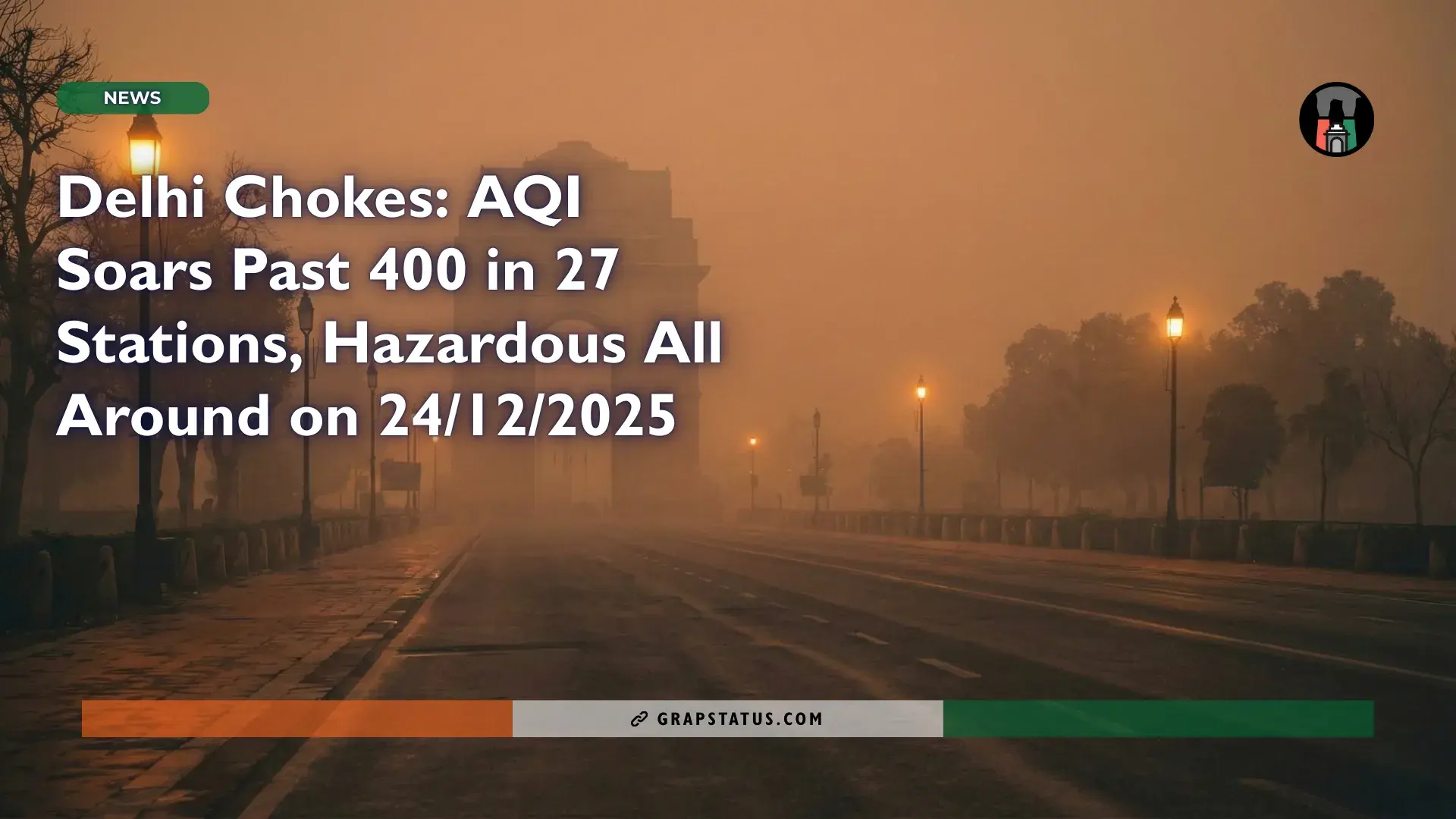
Delhi, the heart of India, woke up this morning to a chilling reality: its air quality has plunged into the ‘Severe’ category, with the Air Quality Index (AQI) breaching the alarming 400 mark in at least 27 monitoring stations across the National Capital Region (NCR). This isn’t just a number; it’s a stark warning, a thick blanket of hazardous pollutants that has settled over homes, schools, and workplaces, affecting millions of lives. The air we breathe today carries serious health risks, turning routine activities into potentially dangerous exposures. Visibility is down, spirits are low, and a pervasive unease hangs in the smog-laden atmosphere.
For days, the air quality has been worsening, a trend often seen during this time of year, but today’s readings are particularly grim. Areas from Anand Vihar to Punjabi Bagh, Dwarka to Nehru Nagar, are all gasping under a suffocating shroud. This severe air pollution isn’t just an inconvenience; it’s an environmental crisis that demands immediate attention and sustained action. Residents are urged to take extreme precautions, as the very air supporting life has become a silent threat, jeopardizing public health and the overall well-being of the region.
The situation underscores a recurring challenge for Delhi and its surrounding areas, highlighting the complex interplay of seasonal factors, vehicular emissions, industrial activities, and agricultural practices. As an environmentalist and news author, witnessing this annual descent into hazardous air is a heartbreaking experience. It’s a clear signal that past measures have not been enough, and a more robust, collective approach is desperately needed to safeguard the health of Delhi’s citizens and its fragile environment.
What Does an AQI Above 400 Mean for Delhi?
When the Air Quality Index (AQI) crosses the 400 threshold, it signals an extremely dangerous level of air pollution, categorized as ‘Severe.’ This measurement helps us understand how clean or polluted the air is and what health effects might be a concern. The AQI is calculated based on several major air pollutants, including particulate matter (PM2.5 and PM10), ground-level ozone, carbon monoxide, sulfur dioxide, and nitrogen dioxide. A higher number means a greater level of air pollution and greater health risks.
Understanding the Air Quality Index (AQI)
The AQI scale ranges from 0 to 500, with different bands indicating varying levels of pollution:
- 0-50: Good (Minimal impact)
- 51-100: Satisfactory (Minor breathing discomfort for sensitive people)
- 101-200: Moderate (Breathing discomfort to people with lung, heart disease, children and older adults)
- 201-300: Poor (Breathing discomfort to most people on prolonged exposure)
- 301-400: Very Poor (Respiratory illness on prolonged exposure)
- 401-500: Severe (Affects healthy people and seriously impacts those with existing diseases)
An AQI above 400, therefore, means the air is severely polluted. It implies a high concentration of harmful particles and gases that are very dangerous to breathe for everyone, not just those who are sensitive or unwell.
The Dangers of ‘Severe’ Air Pollution
The health consequences of breathing ‘Severe’ air are extensive and immediate. Fine particulate matter (PM2.5), which is tiny enough to penetrate deep into the lungs and even enter the bloodstream, is particularly concerning. At these levels, even healthy individuals can experience significant health problems. Symptoms can range from minor discomforts to severe illnesses:
- Respiratory Issues: Intense coughing, shortness of breath, wheezing, and irritation of the throat and eyes.
- Cardiovascular Impact: Increased risk of heart attacks and strokes, especially for those with pre-existing heart conditions.
- Exacerbated Chronic Conditions: Worsening of asthma, bronchitis, and other chronic lung diseases.
- Reduced Lung Function: Long-term exposure can lead to permanent damage to lung tissue and reduced capacity.
- Visibility: A thick haze reduces visibility drastically, impacting daily commutes and outdoor activities.
- Mental Health: The constant oppressive grey skies and restrictions on outdoor life can also affect mental well-being.
Essentially, breathing Delhi’s air today is akin to smoking a significant number of cigarettes, putting everyone at risk. Outdoor exercise becomes harmful, and even staying indoors requires precautions to avoid exposure.

Which Areas Are Worst Affected by Delhi’s Hazardous Air?
The ‘Severe’ air quality is not limited to just one part of Delhi NCR; it’s a widespread problem. Monitoring stations across the region are reporting alarmingly high numbers, painting a grim picture of the air everyone is breathing. From bustling commercial hubs to quiet residential zones, the pollution has spared very few localities, creating a uniform challenge for the entire metropolitan area.
List of 27 Stations Reporting ‘Severe’ Air
While the exact list of all 27 stations can vary slightly throughout the day, consistent hotspots typically include:
- East Delhi: Anand Vihar, Vivek Vihar
- Central Delhi: Mandir Marg, ITO, Lodhi Road
- North Delhi: Jahangirpuri, Wazirpur, Rohini
- South Delhi: RK Puram, Nehru Nagar, Okhla Phase-2, Dwarka Sector 8
- West Delhi: Mundka, Punjabi Bagh, Bawana, Narela
- NCR Regions: Ghaziabad, Noida, Greater Noida, Gurugram, Faridabad (often report similarly high or even worse AQI levels, contributing to the regional haze)
These areas often represent a mix of dense residential populations, heavy traffic corridors, and industrial activities, making them particularly vulnerable to pollutant accumulation. The uniformity of high AQI across such diverse locations highlights the pervasive nature of the problem, indicating that local factors combine with regional influences like wind patterns to spread the poor air widely.
Why Do Certain Areas Suffer More?
The varied geography and human activities across Delhi NCR contribute to why some areas experience worse air quality than others:
- Proximity to Industrial Zones: Areas near industrial estates (like Bawana, Narela, Okhla) face higher emissions from factories and power plants.
- Traffic Congestion: Roads with heavy traffic, like ITO and Anand Vihar, see high levels of vehicular pollution, including nitrogen oxides and particulate matter.
- Construction Activity: Ongoing construction projects generate significant dust, adding to PM levels. Many parts of Delhi always have some form of construction happening.
- Geographical Factors: Delhi’s landlocked nature and bowl-shaped geography, especially during winter with slow winds, trap pollutants close to the ground.
- Burning Practices: Proximity to areas where stubble burning occurs (outside Delhi but impacting the NCR) or local waste burning can significantly increase pollutant levels.
- High Population Density: Densely populated areas contribute more to local emissions from households, cooking, and local transport.
These factors combine to create localized pollution pockets, which then merge with broader atmospheric conditions to engulf the entire region. Understanding these local causes is crucial for developing targeted solutions.
How Does Delhi’s Current Air Crisis Compare to Past Years?
The current air pollution crisis in Delhi is unfortunately not an isolated event. It is part of a recurring pattern that has plagued the city for several years, particularly during the colder months. Each year, as winter approaches, a combination of factors traps pollutants, leading to a visible and dangerous drop in air quality. While some years might be marginally better or worse, the fundamental problem remains, signaling a persistent challenge for the region.
A Recurring Nightmare: Seasonal Pollution Trends
- Stubble Burning: Farmers in neighbouring states burn crop residue after harvest, releasing massive plumes of smoke that drift into Delhi. This is a major contributor to the sudden spike in PM2.5 levels.
- Diwali Festivities: Although efforts are made to control firecracker use, the emissions from these celebrations add significantly to the pollutant load during this critical period.
- Vehicular Emissions: With millions of vehicles on the road daily, exhaust fumes are a constant source of pollution, made worse by colder temperatures that reduce engine efficiency.
- Industrial Emissions: While many polluting industries have been moved out of city limits, their cumulative impact on the wider NCR remains significant.
- Weather Conditions: During winter, slower wind speeds and lower temperatures create a phenomenon called ‘temperature inversion,’ where a layer of warm air traps cold, polluted air close to the ground, preventing its dispersal. This leads to the thick, persistent smog.
- Dust from Construction and Roads: Uncontrolled dust from construction sites and unpaved roads continues to be a major source of coarse particulate matter.
Comparing today’s AQI values with historical data shows a worrying trend. While there have been sporadic improvements due to specific interventions or favourable weather, the core issue of seasonal air pollution remains largely unaddressed at a systemic level. This ‘Severe’ rating is a familiar, unwelcome guest.
Global Context: Where Does Delhi Stand?
In terms of air quality, Delhi consistently ranks among the most polluted major cities in the world. Reports from global environmental organizations and air quality monitors frequently place Delhi, along with other cities in the Indo-Gangetic Plain, at the top of lists for highest particulate matter concentrations. This isn’t a competition anyone wants to win.
While many developed cities have successfully reduced their air pollution over decades through stringent environmental regulations, cleaner technologies, and robust public transport systems, Delhi continues to grapple with this challenge. The scale of the population, rapid urbanization, and a diverse range of pollution sources make it a particularly complex problem to tackle. The city’s air quality regularly surpasses the World Health Organization (WHO) safety guidelines by many times, putting its residents at a much higher risk of pollution-related diseases compared to people in cities with cleaner air.
This global comparison highlights the urgency and the magnitude of the task at hand. Delhi’s air crisis is not just a local problem but a significant global environmental and public health concern.
What Can Delhi Residents Do to Stay Safe?
With the air quality in the ‘Severe’ category, taking immediate precautions is crucial for every resident of Delhi. While long-term solutions are being sought, individual actions can significantly reduce personal exposure to harmful pollutants. Protecting oneself and loved ones becomes a priority when the air itself is hazardous.
Immediate Protection: Masks, Air Purifiers, Indoor Safety
- Wear N95/P100 Masks Outdoors: Simple cloth masks offer little protection against fine particulate matter. N95 or P100 respirators, when worn correctly, can filter out a significant percentage of harmful particles.
- Stay Indoors: Limit outdoor activities, especially during peak pollution hours (early morning and late evening). If you must go out, keep your exposure time short.
- Use Air Purifiers: Inside homes and offices, consider using air purifiers with HEPA filters. These can help reduce indoor particulate levels.
- Seal Windows and Doors: Keep windows and doors tightly shut to prevent outdoor air from seeping in.
- Avoid Strenuous Exercise Outdoors: During periods of severe pollution, intense physical activity outdoors increases the amount of polluted air inhaled, leading to greater harm.
- Stay Hydrated: Drinking plenty of water can help clear irritants from your respiratory system.
- Avoid Indoor Pollutants: Refrain from burning candles, incense, or using wood-burning stoves, as these can add to indoor air pollution.
These immediate steps can create a safer micro-environment, especially inside homes, offering some respite from the pervasive outdoor pollution.
Protecting Vulnerable Groups: Children, Elderly, Those with Illnesses
- Children: Their respiratory systems are still developing, and they breathe faster, inhaling more pollutants relative to their body size. Keep them indoors, ensure they wear masks if they must go out, and monitor for symptoms.
- Elderly Individuals: Older adults often have weaker immune systems and pre-existing health conditions (like heart or lung disease), making them highly vulnerable. Limit their outdoor movement strictly.
- Individuals with Chronic Diseases: People with asthma, chronic obstructive pulmonary disease (COPD), heart disease, or diabetes are at a significantly higher risk. They should strictly follow their doctor’s advice, keep necessary medications handy, and avoid any outdoor exposure.
- Pregnant Women: Exposure to severe air pollution can affect fetal development. Pregnant women should take all possible precautions to limit exposure.
Families and caregivers of vulnerable individuals must be extra vigilant, providing a safe environment and seeking medical attention immediately if symptoms worsen.
Is There Hope? Long-Term Solutions and Government Efforts
While the immediate situation is grim, the recurring nature of Delhi’s air pollution crisis points to the need for sustained, long-term solutions. Both government actions and individual citizen contributions are vital to turning the tide against this environmental challenge.
What Government Actions Are Being Taken?
- Graded Response Action Plan (GRAP): This plan specifies measures to be taken based on the severity of air pollution (e.g., banning construction, odd-even scheme for vehicles, shutting down polluting industries).
- Transition to Cleaner Fuels: Promoting CNG for public transport and industrial units.
- Stubble Burning Management: Providing farmers with machinery for crop residue management and incentives not to burn.
- Promoting Public Transport: Expanding metro networks and electric buses to reduce reliance on private vehicles.
- Green Initiatives: Large-scale tree planting drives and development of green spaces.
- Emissions Norms: Implementing stricter Bharat Stage (BS) emission standards for vehicles.
These efforts are steps in the right direction, but their consistent implementation and stricter enforcement are crucial to see a lasting impact.
How Can Citizens Contribute to Cleaner Air?
- Reduce Vehicle Use: Opt for public transport, carpooling, cycling (when air quality permits), or walking for short distances.
- Maintain Vehicles: Ensure your vehicle is well-maintained and regularly checked for emissions.
- Proper Waste Management: Avoid burning waste, especially biomass and plastic, as it releases toxic pollutants.
- Energy Conservation: Reduce electricity consumption, which lessens the demand on power plants that contribute to air pollution.
- Plant Trees: Participate in local tree-planting initiatives to help improve local air quality.
- Report Violations: Report instances of waste burning, polluting industries, or construction dust to relevant authorities.
Collective action, driven by both policy and public participation, is the only sustainable path toward breathing clean air in Delhi.
As Delhi continues to grapple with hazardous air, the urgency for a comprehensive and collaborative approach has never been clearer. The current AQI readings are not just statistics; they are a direct challenge to the health and future of millions. The collective responsibility of the government, industries, and every single resident is paramount. While immediate protections are necessary for survival in the short term, lasting change demands a deeper commitment to sustainable practices and robust environmental governance. It’s time for Delhi to truly breathe freely, and that future hinges on the actions we take today.