GRAP-3 Pollution Curbs Lifted in Delhi-NCR as Air Quality Improves
In a welcome development for the residents of Delhi and the National Capital Region (NCR), a significant step towards easing daily life has been taken. The Commission for Air Quality Management (CAQM) announced on Friday, January 2, 2026, that all strict restrictions under Stage III of the Graded Response Action Plan (GRAP) have been lifted […]
In a welcome development for the residents of Delhi and the National Capital Region (NCR), a significant step towards easing daily life has been taken. The Commission for Air Quality Management (CAQM) announced on Friday, January 2, 2026, that all strict restrictions under Stage III of the Graded Response Action Plan (GRAP) have been lifted immediately across the region. This decision comes after a noticeable improvement in air quality, offering a much-needed respite from the stringent anti-pollution measures that had been in place.
The air quality in Delhi, which had plunged to a “very poor” Air Quality Index (AQI) of 380 just the day before, saw a remarkable drop to 236 by 4 PM on Friday. While still falling into the “poor” category (AQI 201-300), this substantial improvement signals a clear positive trend. Experts attribute this positive shift largely to favorable weather conditions, particularly stronger winds, which have helped disperse trapped pollutants more effectively. The CAQM’s sub-committee overseeing GRAP made this decision, focusing on the current improving air quality while ensuring that all measures from GRAP Stages I and II remain active to prevent any quick return to severe pollution levels.
What is GRAP and Why Does it Matter for Delhi?
GRAP, or the Graded Response Action Plan, is like an emergency alarm system for air pollution in Delhi-NCR, especially during the colder winter months. It’s a dynamic, color-coded protocol that springs into action based on how bad the air quality gets. Its main goal is to tackle the sudden spikes in winter air pollution, which are often caused by a combination of factors:
- Stagnant Air: When the air doesn’t move much, pollutants hang around.
- Low Winds: Gentle breezes can’t carry pollution away.
- Inversion Layers: A blanket of warm air traps colder, polluted air close to the ground.
- Emissions: Smoke and exhaust from vehicles, factories, crop burning, and construction dust all contribute.
GRAP has different stages, each with a set of rules that become stricter as the air quality worsens. Stage III, which was just lifted, is triggered when the AQI hits “severe” levels, meaning between 401 and 450. At this stage, the aim is to cut down pollution by a significant 30-40% through targeted actions on the biggest polluters.
Why Were the Strict Stage III Curbs Needed Recently?
The recent activation of GRAP Stage III in December was a direct response to a worrying surge in air pollution. The main culprits were calm winds, often blowing at less than 5 kilometers per hour, combined with high humidity (70-90%) and temperature inversions. These conditions created a perfect storm, trapping harmful pollutants like nitrogen dioxide (NO2), sulfur dioxide (SO2), and black carbon near the ground, making the air extremely unhealthy to breathe.
The goal of Stage III restrictions is to aggressively reduce these emissions. By targeting major sources, the authorities hoped to bring down the AQI quickly and protect public health. This is crucial because Delhi-NCR’s annual average level of fine particulate matter (PM2.5), which is tiny particles that can enter our lungs, often hovers around 90-100 micrograms per cubic meter. This is a staggering 15-20 times higher than the 5 micrograms per cubic meter guideline recommended by the World Health Organization (WHO).

What Specific Restrictions Were Lifted for Daily Life?
With GRAP Stage III now revoked, several significant restrictions that impacted daily life and various sectors are no longer in effect. This means a return to more normal operations for many businesses and individuals.
Construction and Demolition Activities Can Resume
One of the most noticeable changes is the resumption of non-essential construction and demolition activities. These activities are known to contribute a substantial 20-25% of the dust pollution in the NCR. During Stage III, many types of construction work were strictly prohibited, including:
- Earthwork, which involves digging and moving soil.
- Foundation work, piling, and boring.
- Open trenching, welding, cutting, grinding, painting, and plastering.
- Tile and flooring work.
- Operations of ready-mix concrete (RMC) plants, which produce concrete.
Also, stone crushers, hot-mix plants (used for making asphalt for roads), and brick kilns (especially those not using cleaner zig-zag technology) had to stop operations. Sub-surface mining and quarrying were also halted. Now, these activities can restart, but they must strictly follow dust mitigation rules outlined in the Comprehensive Action Plan (CAP). This includes things like having 50% green cover on sites, using screens to block wind, and continuously checking PM10 levels with online sensors.
The transportation of dusty materials like cement, sand, gravel, and fly ash on unpaved roads was also banned. This was to prevent dust from being kicked up into the air. Now, these materials can be transported again, but trucks must be covered, and sites should have wheel-washing pits to clean vehicle tires before they leave.
Vehicle Bans Are Withdrawn
Another major change affects commuters and businesses:
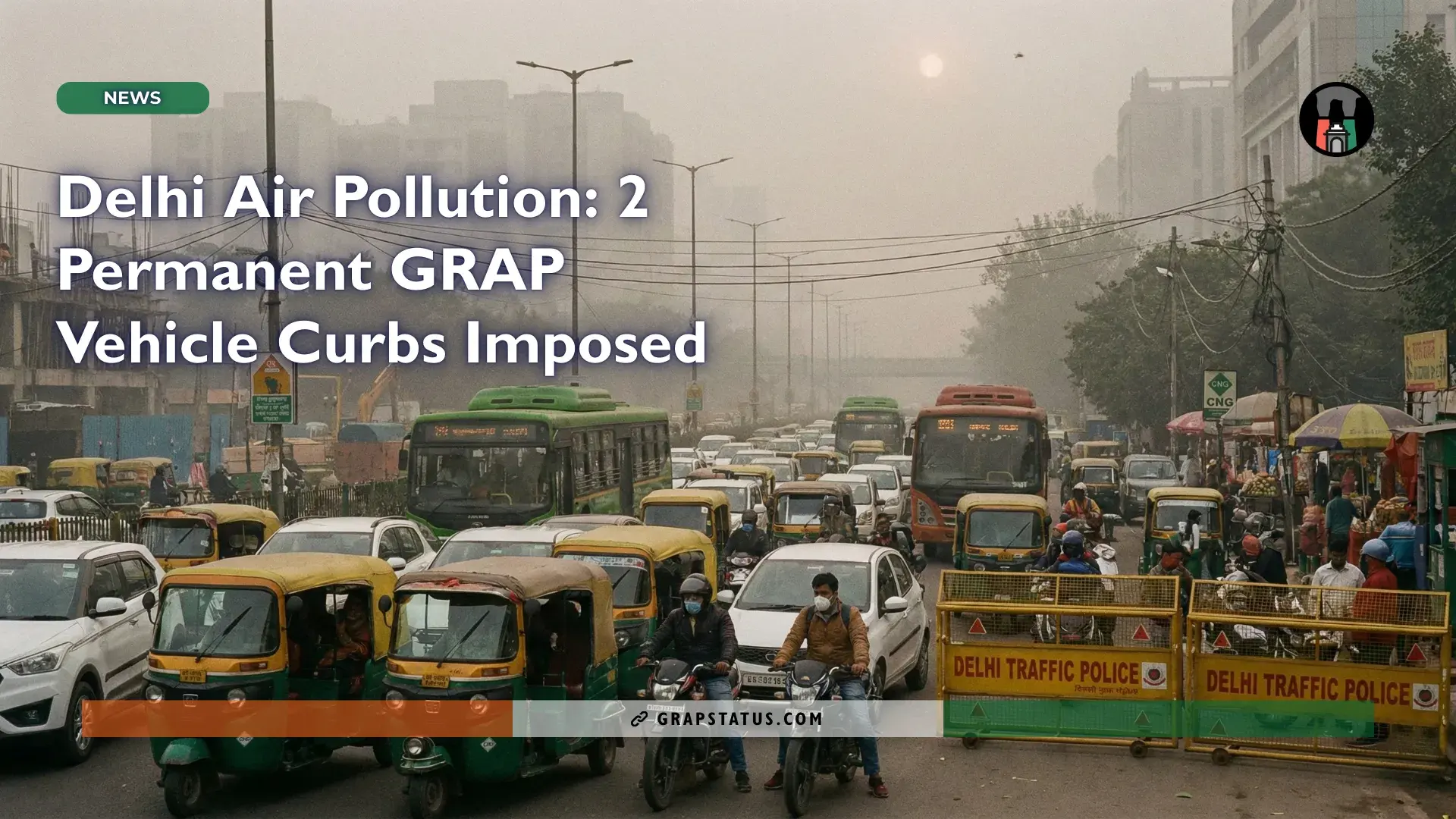
- Older Petrol and Diesel Cars: Vehicles that run on BS-III petrol and BS-IV diesel fuel standards (which emit 2-5 times more harmful particles and nitrogen oxides than newer BS-VI vehicles) were banned. These four-wheelers can now operate on the roads again. Although operation of vehicles without a valid PUCC and entry of N0n BS6 Vehicles from other state are still prohibited as those curbs have been made permanent.
- Diesel Goods Vehicles: Non-essential medium goods vehicles (MGVs) that run on diesel faced a complete ban. They are now allowed to operate.
- Inter-State Buses: Diesel buses coming from other states that did not meet cleaner emission standards (like CNG, electric, or BS-VI) were barred from entering Delhi. These buses can now re-enter the capital.
This withdrawal of vehicle bans will likely ease traffic and transportation for many, though it also means more vehicles on the road, which can increase emissions.
Industrial Units and Schools
Industrial units that were using unapproved, dirtier fuels like petcoke or furnace oil had been shut down. While the general Stage III ban on these types of industries is lifted, specific units previously closed by CAQM for violations (e.g., exceeding pollution limits or not following environmental rules) cannot restart without special CAQM approval.
For students, the hybrid or online classes for children up to Class 5, which were put in place to reduce their exposure to bad air, are also being fully rolled back. Physical classes for these young students can now fully resume.
What GRAP Rules Are Still in Effect?
Even though Stage III restrictions have been lifted, it’s crucial to understand that the fight against air pollution is far from over. All measures under GRAP Stages I and II (triggered at “poor” AQI 201-300 and “very poor” AQI 301-400 respectively) remain strictly enforced. These ongoing measures include:
- Enhanced Public Transport: Efforts to increase public bus fleet by 10-20% continue, encouraging people to use shared transport instead of private vehicles.
- Work from Home for Offices: Non-essential offices are still advised to implement 50% work-from-home policies to reduce vehicular traffic.
- Industrial Fuel Bans: Bans on the use of coal and gas in industries (unless they are operating with approved, cleaner technologies) remain in place.
- Road Cleaning: Daily mechanical sweeping of roads with water sprinkling is mandatory to suppress dust.
- Garbage Incineration: Strict prohibitions against burning garbage in the open continue to be enforced.
It’s important to note that any construction or industrial sites that were specifically closed down by the CAQM for violating pollution norms (such as exceeding PM10 limits or not following Environmental Clearance conditions) cannot simply restart. They require explicit approval from the CAQM, and monitoring via inspections and satellite will continue to ensure compliance.
The Role of Weather and What Lies Ahead
The revocation of Stage III measures is a direct reflection of the significant 38% drop in AQI within 24 hours. This improvement was largely due to favorable changes in weather. Wind speeds picked up, reaching 8-12 kilometers per hour, which is much better than the calm winds experienced earlier. More importantly, the atmospheric boundary layer, which is the layer of air closest to the ground where pollutants get trapped, expanded significantly from a shallow 300 meters to a much higher 800 meters. This increased height allows for better ventilation and dispersion of pollutants, meaning they don’t stay concentrated at breathing level.
While this news brings relief, the underlying challenges of air pollution in Delhi-NCR persist. GRAP serves as a critical tool for managing seasonal pollution spikes, and historical data shows that Stage III interventions can reduce the AQI by 20-50 points within a few days by drastically cutting emissions. The situation will be continuously monitored by over 40 real-time stations under the Central Pollution Control Board (CPCB).
The authorities remain vigilant. If the air quality were to worsen again and the AQI breaches the 400 mark, an escalation of GRAP stages, including the re-imposition of Stage III restrictions, would be immediately considered. For now, Delhi-NCR can enjoy a temporary period of cleaner air, but the collective responsibility to protect our environment and ensure sustainable air quality for the long term continues to be paramount.