Delhi-NCR Air Pollution: Construction And Demolition Banned From November 5 To 20
Union Environment Minister Bhupender Yadav has announced a complete halt to construction and demolition activities across the National Capital Region. This regional ban starts on November 5 and remains active through November 20. The decision comes as part of stepped-up measures to control severe seasonal pollution across Delhi and surrounding urban centers as winter approaches. […]
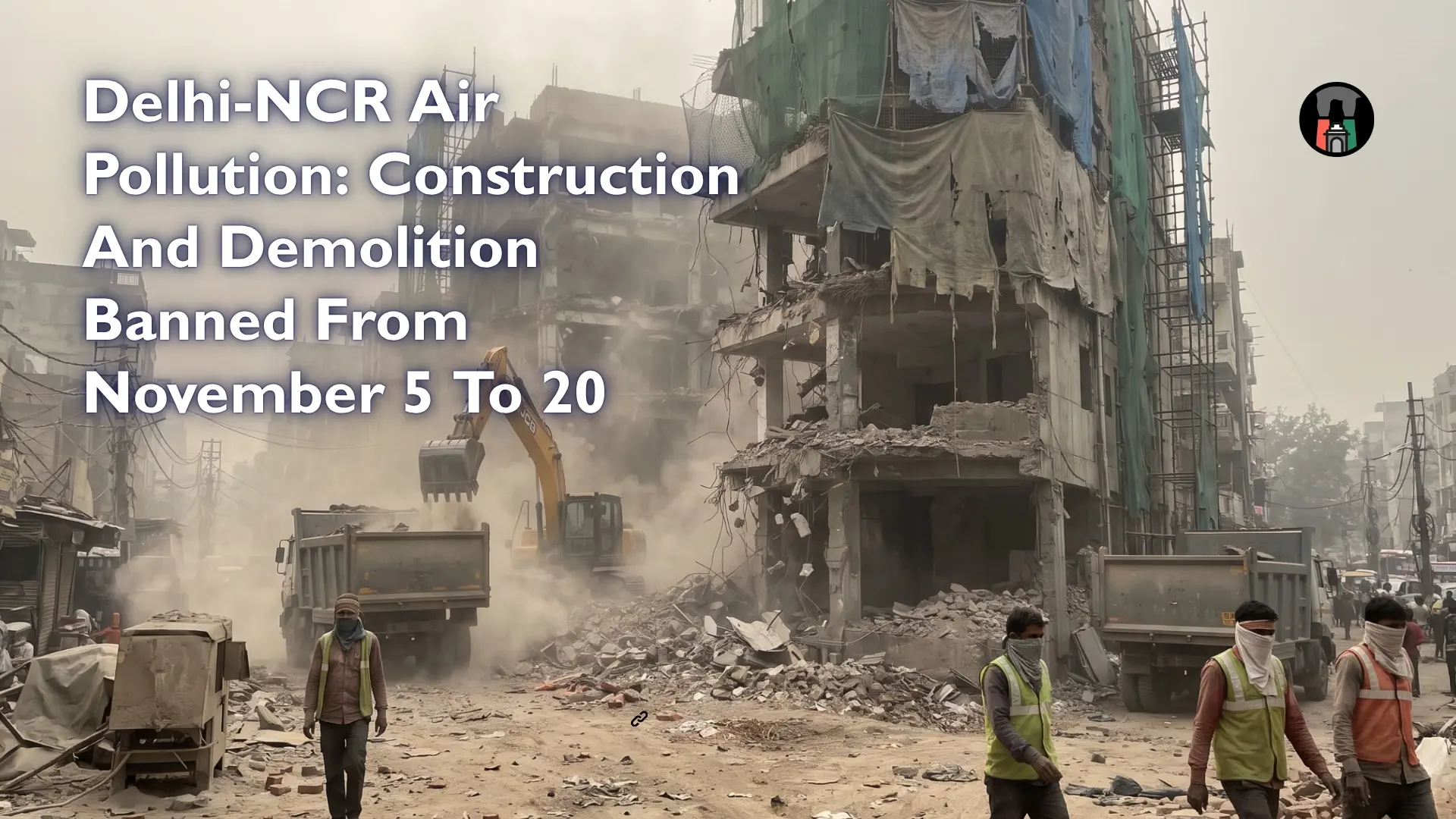
Union Environment Minister Bhupender Yadav has announced a complete halt to construction and demolition activities across the National Capital Region. This regional ban starts on November 5 and remains active through November 20. The decision comes as part of stepped-up measures to control severe seasonal pollution across Delhi and surrounding urban centers as winter approaches. Minister Bhupender Yadav emphasized that all government and municipal agencies must ensure strict compliance with the directive to curb atmospheric dust and protect public health.
The timing of the directive aligns with a critical shift in regional air quality. Delhi recorded poor air quality levels earlier in the week, with the official Air Quality Index rising above the 200 mark on both Wednesday and Thursday. These elevated readings raised immediate concerns among environmental authorities, prompting the government to institute firmer preventive measures before atmospheric conditions worsen across northern India.
A sudden weather change brought temporary relief to the region late Thursday night into early Friday morning. Incessant overnight rainfall washed across the national capital, significantly lowering pollutant levels and bringing a noticeable nip to the air that signaled the onset of winter. Data from the Central Pollution Control Board revealed that Delhi’s Air Quality Index improved to 133 by 4:00 a.m. on Friday, shifting the air quality reading into the moderate category.
Despite this brief rain-induced improvement, officials stress that long-term measures remain necessary. The India Meteorological Department had previously issued a yellow alert for Delhi and adjoining NCR districts, predicting rain and thunderstorms over a 24 to 48-hour window while forecasting clear skies heading into early November. Because dry, clear conditions allow dust and particulate matter to build up quickly, the 16-day construction and demolition ban is designed to prevent a sharp spike in airborne pollution across Delhi, Noida, Ghaziabad, Gurugram, and Faridabad.

What Is the November Construction and Demolition Ban in Delhi-NCR?
The November construction and demolition ban is defined as a mandatory regional restriction that halts all active building, site clearing, earthmoving, and structural demolition work across Delhi and adjoining National Capital Region districts between November 5 and November 20 to control airborne particle pollution.
This directive targets loose dust, which represents one of the major contributors to particulate pollution in the National Capital Region during the transition into winter. By stopping earthmoving, excavation, concrete mixing, and material transport, environmental regulators aim to reduce the total volume of coarse and fine dust suspended in the air. Union Environment Minister Bhupender Yadav emphasized that the prohibition applies uniformly across all agencies operating within NCR boundaries, leaving no exemption for non-essential construction tasks during the 16 days.
| Policy Parameter | Official Directive Details |
|---|---|
| Enforcing Authority | Union Environment Ministry & Associated Regional Agencies |
| Geographic Scope | Entire National Capital Region (Delhi, Noida, Ghaziabad, Gurugram, Faridabad) |
| Start Date | November 5 |
| End Date | November 20 |
| Primary Objective | Control seasonal rise in air pollution and prevent dust resuspension |
How Do Weather Changes and Rainfall Impact Regional Air Quality?
Weather patterns play a major role in determining how pollutants disperse or collect across the national capital. Before the recent precipitation, stagnant air and seasonal conditions pushed pollution levels into uncomfortable territory. The Air Quality Index remained above 200 on Wednesday and Thursday, registering in the poor category according to official Central Pollution Control Board tracking.
Conditions shifted dramatically when incessant overnight rainfall hit the region. Visual reports from major transit points and neighborhood hubs, including the Hazrat Nizamuddin Railway Station and the Jamia Millia Islamia area, showed rain-soaked streets and steady downpours continuing late into the night. The physical action of falling rain washed suspended particles out of the lower atmosphere, clearing the air and lowering local temperatures.
The India Meteorological Department tracked this meteorological event closely. On October 29, the IMD issued a yellow alert covering Delhi and adjoining NCR districts. The weather agency forecasted rain and thunderstorms over the following 24 to 48 hours, while also noting that clear skies would return heading into early November. While the overnight downpour provided immediate air quality relief, returning clear skies typically create dry ground conditions, making proactive pollution bans essential.
Why must Government Agencies Enforce Strict Compliance as Winter Sets In?
Union Environment Minister Bhupender Yadav stressed that strict compliance by every administrative agency is vital to managing the regional air quality crisis. As temperatures drop and winter sets in, atmospheric inversion layers trap emissions closer to the ground. Without strict oversight, dust generated by unmonitored building sites quickly mixes with vehicle emissions and industrial smoke, producing dense smog.
Enforcement agencies across Delhi, Haryana, Uttar Pradesh, and Rajasthan must coordinate efforts to ensure that site operators respect the November 5 to November 20 window. Key compliance measures required across the region include:
- Halting all excavation, earthmoving, and foundation-building activities on private and public projects.
- Stopping structural demolition work that creates large clouds of airborne particulate matter.
- Ensuring that stored construction materials, soil mounds, and debris piles remain completely covered.
- Conducting regular field inspections across Delhi-NCR districts to catch and fine non-compliant operators.
- Aligning local municipal actions with broader regional air quality protection protocols.
Does Overnight Rain Permanently Resolve Delhi Air Pollution?
Overnight rain does not permanently resolve air pollution in Delhi-NCR, because rainfall only cleans the air temporarily without stopping daily emission sources. Once rain clouds pass and ground moisture evaporates, dry weather allows dust and fine particles to enter the air again.
The India Meteorological Department confirmed this physical reality in its weather outlook. Although the yellow alert issued on October 29 predicted rain and thunderstorms over a 24 to 48-hour period, the forecast also indicated a return to clear skies heading into early November. Clear skies in late autumn bring lower nighttime temperatures, calm winds, and atmospheric settling—conditions that prevent air movement and trap newly generated pollution near the ground.
Because weather relief is temporary, residents and authorities must plan. You should monitor official Central Pollution Control Board updates daily if you plan outdoor physical activities, as air pollution levels can rise quickly after rain stops. You should also ensure that residential and commercial premises follow local dust control guidelines if weather conditions turn dry and windy.
Connecting Construction Bans to Broader Regional Pollution Rules
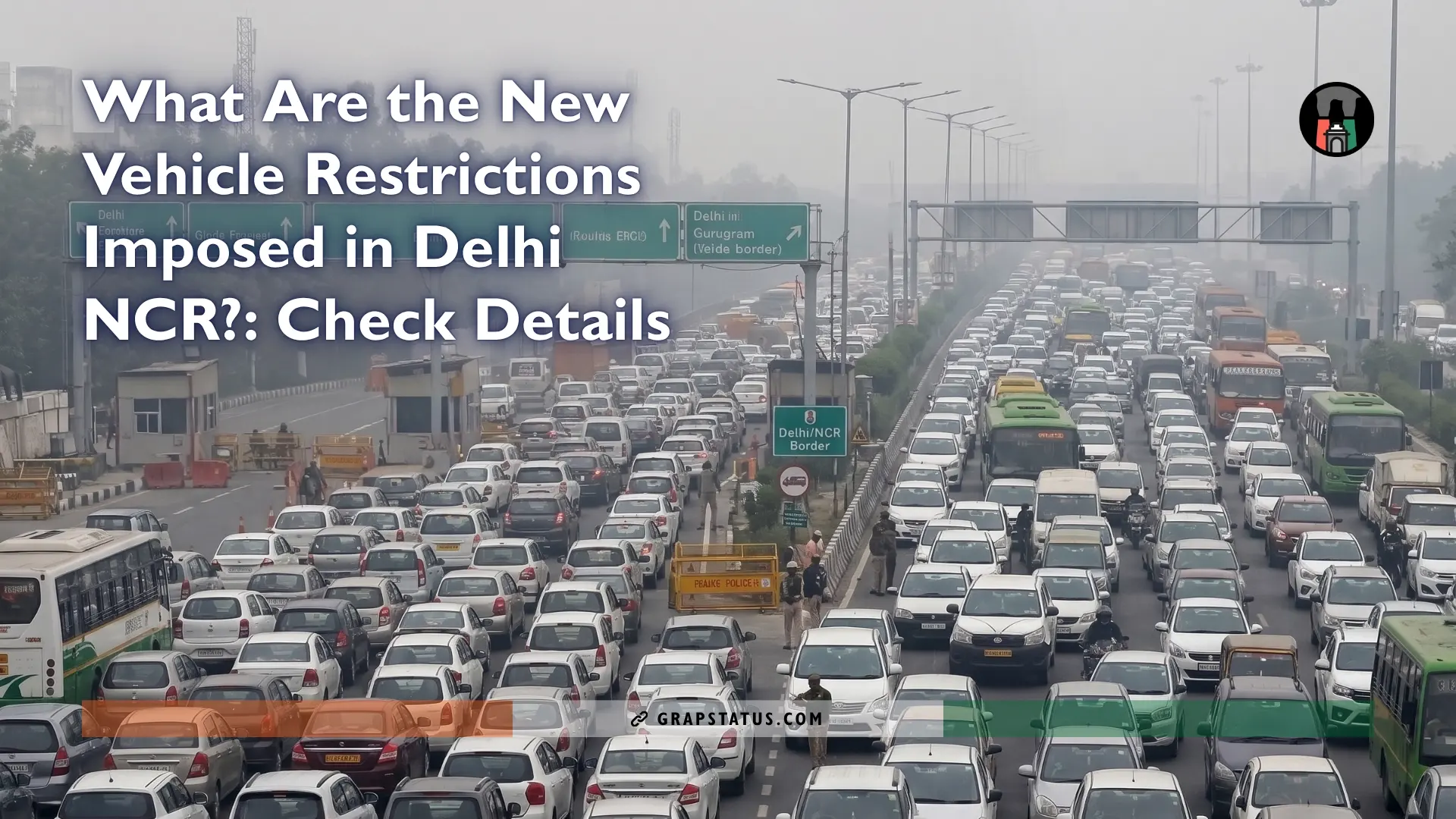
The construction and demolition freeze between November 5 and November 20 forms one part of a larger administrative framework designed to control seasonal air degradation across northern India. To understand how building bans fit within tiered emergency measures, you can read our detailed guide on understanding Delhi-NCR’s GRAP stages.
While temporary site closures target visible dust sources, researchers and policymakers continue to evaluate whether short-term restrictions solve deep structural causes or simply treat immediate environmental symptoms. You can read more about this ongoing policy discussion in our article on how anti-pollution rules target symptoms and causes.
As winter weather continues to take hold and clear skies return, individual precautions remain important alongside official government action. For practical advice on safeguarding your family during high pollution events, review our recommendations for staying safe during high pollution days.