Delhi Air Quality Remains ‘Poor’ for 3rd Consecutive Day on 12/12/25
Delhi’s air stays in the poor category for the third day straight. The Air Quality Index nears very poor levels, with smog blanketing the capital city.A thin layer of smog covers parts of Delhi NCR on this Friday. Visibility drops as pollution holds steady, raising worries for residents’ health.The Central Pollution Control Board reports an […]
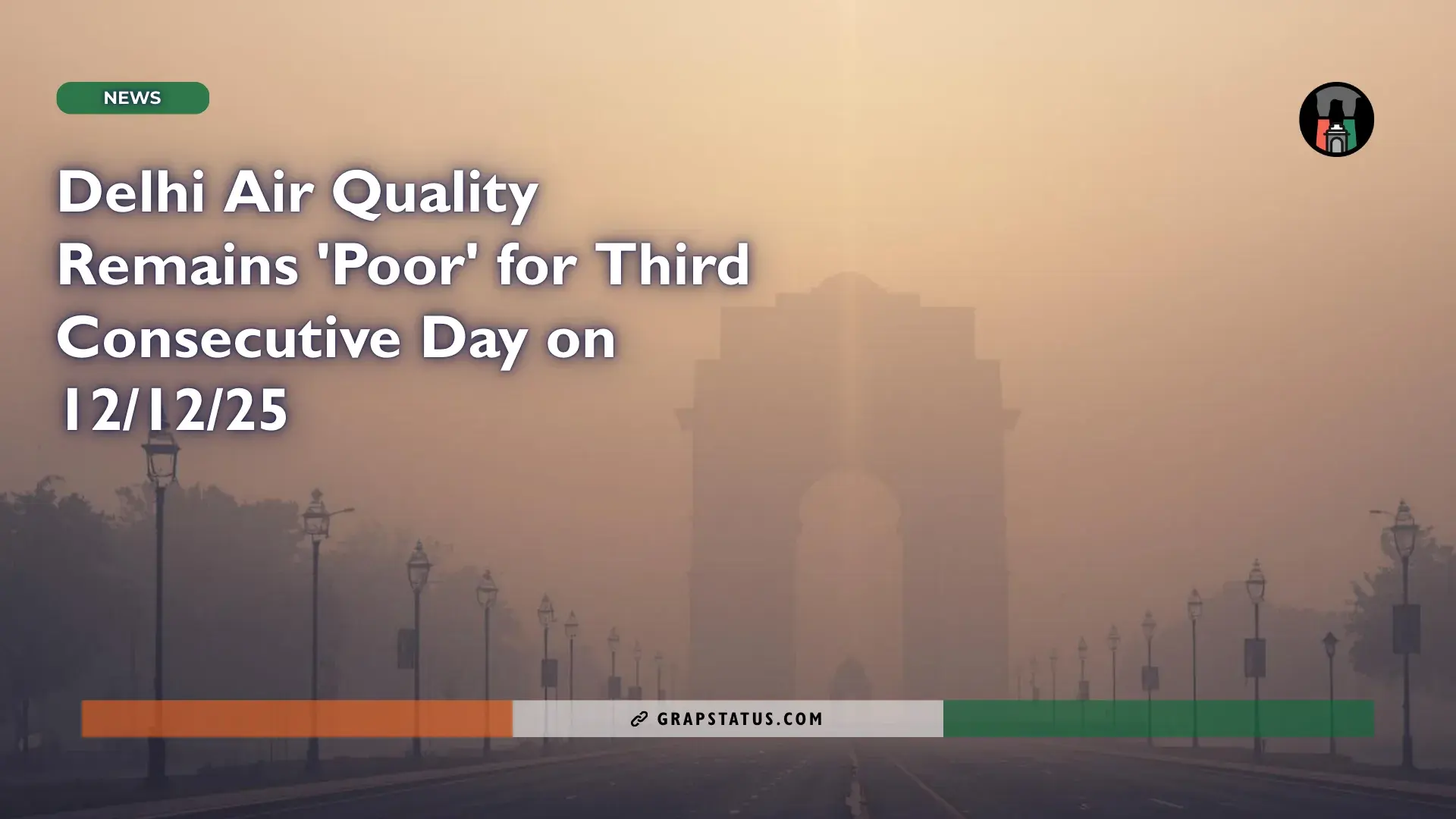
Delhi’s air stays in the poor category for the third day straight. The Air Quality Index nears very poor levels, with smog blanketing the capital city.A thin layer of smog covers parts of Delhi NCR on this Friday. Visibility drops as pollution holds steady, raising worries for residents’ health.The Central Pollution Control Board reports an AQI of 287 at 8 am on Thursday across the national capital. This marks the poor range, where levels sit between 201 and 300.Stations like Aya Nagar show 246, Burari 295, and Dwarka 289, all in poor brackets. Anand Vihar hits 302, entering very poor territory at 301-400.

Where Does Delhi NCR’s AQI Stand Today?
Delhi’s overall AQI reaches 349 at 4 PM on December 12, listed as very poor by CPCB data. PM2.5 and PM10 dominate as key pollutants.Poor air quality is defined as an AQI from 201 to 300, where health effects start for sensitive groups.Very poor spans 301 to 400, impacting everyone with breathing issues.Smog layers form from trapped dust, vehicle smoke, and farm fires. These particulates, called PM2.5 and PM10, are fine particles that enter lungs deeply.
Why Is Smog Blanketing Delhi and Nearby Areas?
Winter winds slow, trapping pollutants over the Indo-Gangetic plain. Calm weather persists, holding smoke close to ground level. Vehicle exhaust adds nitrogen oxides, a major smog builder. Factories release sulfur dioxide, worsening the haze in industrial belts like Bawana. Stubble burning from neighboring states sends PM2.5 plumes toward Delhi. This seasonal spike pushes AQI higher each year. Dust from construction sites stirs up coarse PM10 particles. Dry soil in winter amplifies this ground-level source.
Which Spots in Delhi Show Worst Pollution?
Ashok Vihar records 332, Bawana 335, and ITO 310, all very poor. Alipur at 315 and Chandani Chowk at 309 follow close. Outside Parliament, independent checks hit 367, very poor, while nearby official stations read 185 moderate.This gap sparks debate on data accuracy. Such hotspots cluster in dense areas with heavy traffic and crowds. They highlight uneven pollution spread across the city.
How Does Poor Air Affect Health in the Capital?
Air pollution is seen as the single largest health risk in Delhi. PM2.5 particles are inhaled deep into lungs and blood. They trigger asthma, coughs, and heart strain. Sensitive groups like children and the old face higher risks. Respiratory diseases rise, with hospital visits spiking in poor AQI days. Government notes no direct death data tied only to pollution, yet admits it worsens lung ailments Research from health institutes backs the threat.
What Can Residents Do During Very Poor AQI Days?
You should limit outdoor time if AQI tops 300. Wear N95 masks in traffic or smog. Stay indoors with windows shut, use air purifiers if available. Drink water to clear throat irritation. Schools might shift online; construction halts under GRAP rules. These graded steps activate as levels climb.
Where Can You Check Live AQI for Delhi NCR?
You can check our AQI Monitor, in terms of authorities- CPCB site offers daily bulletins and station data. SAFAR portal also predicts forecast of next 72 hours.