Delhi’s Choking AQI: Can Beijing’s Blueprint Be Used To Beat Air Pollution?
Delhi’s suffering from choking AQI. Can Beijing’s blueprint used to beat India’s air pollution?
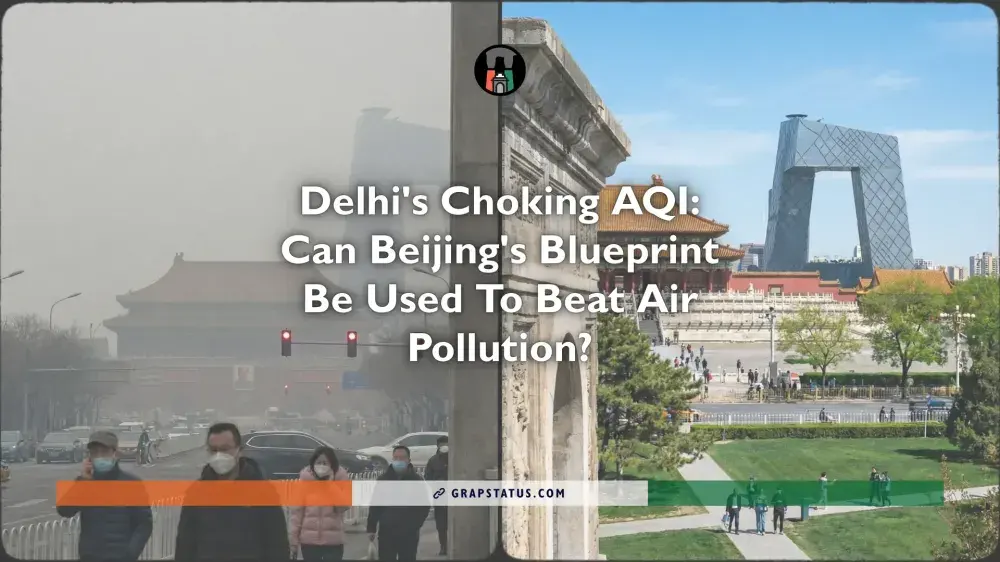
Delhi, the bustling heart of India, finds itself trapped in an environmental nightmare, battling an air pollution crisis that has spiraled into one of the world’s most severe challenges. Each winter, the city’s air quality takes a drastic turn for the worse, blanketing millions in a thick, toxic smog. This isn’t just a seasonal inconvenience; it’s a profound public health emergency, impacting every breath taken by its residents.
The numbers paint a chilling picture. Currently, the tiny, dangerous PM2.5 particles in New Delhi’s air are, on average, a staggering 14 times higher than what is found in Beijing. While Beijing records about 29 micrograms per cubic meter, Delhi’s air quality often reaches 72 micrograms per cubic meter. To put this in perspective, the World Health Organization (WHO) recommends a PM2.5 limit of just 15 micrograms per cubic meter. This means Delhi’s air is roughly 15 times more polluted than what is considered safe by global health standards. The pollution index for Delhi stands at a shocking 90.17, with its air quality specifically rated as “Very High” at 88.08, starkly contrasting Beijing’s “High” rating of 73.48.
This severe air pollution carries a devastating human cost. In 2023 alone, ambient particulate matter pollution was linked to 17,188 deaths in Delhi, accounting for a significant 15% of all fatalities in the city. These aren’t just statistics; they represent lives cut short, families grieving, and a healthcare system under immense strain from respiratory illnesses and other pollution-related ailments. The crisis casts a long shadow over the city’s future, demanding urgent and effective action.
What Makes Delhi’s Air So Dangerous?
Delhi’s air quality is exceptionally hazardous due to its extraordinarily high levels of PM2.5 particles, which are fine airborne particles that can deeply penetrate the lungs and bloodstream. These dangerous particles are present at levels 14 times higher than in Beijing and 15 times above the safe limit set by the World Health Organization (WHO). This severe pollution is reflected in Delhi’s “Very High” air pollution rating of 88.08 on the pollution index, making it one of the most polluted major cities globally. The direct consequence of this toxic air is a severe public health crisis, with ambient particulate matter pollution linked to over 17,000 deaths in the city in 2023, representing 15% of all fatalities.

How Did Beijing Turn Its Air Around?
The story of Beijing offers a powerful contrast and a beacon of hope. In the early 2010s, both Delhi and Beijing faced equally dire air quality crises, with PM2.5 levels soaring to 500 micrograms per cubic meter – about 50 times the WHO limit. This common starting point makes Beijing’s subsequent transformation even more remarkable. Over the following decade, Beijing achieved an astonishing two-thirds reduction in its PM2.5 levels, effectively cleaning up its skies.
This dramatic cleanup wasn’t confined to Beijing alone. Between 2013 and 2020, China was responsible for three-quarters of the entire world’s reduction in air pollution. Beijing specifically saw its PM10 levels drop significantly from 292 to 92 micrograms per cubic meter. This environmental recovery brought tangible health benefits: life expectancy in Beijing jumped by 4.6 years, and hospitals reported 20% fewer cases of respiratory problems. Across China, life expectancy increased by two years, directly showing how improving air quality can save and extend lives.

What Was Beijing’s Winning Strategy Against Pollution?
Beijing’s impressive victory against air pollution stemmed from a comprehensive, centralized, and unwavering approach. The Chinese government implemented a series of strong and coordinated actions. This involved strict industrial regulations, which included shutting down many polluting factories. They also moved away from charcoal for heating homes, pushing for cleaner energy sources and encouraging the adoption of electric vehicles.
The strategy also heavily focused on transport. Beijing aggressively promoted public transport systems and placed restrictions on private vehicles, increasing parking fees and enforcing tougher emissions rules. Crucially, Beijing’s approach wasn’t a series of quick fixes but a sustained, long-term commitment. It was backed by significant government spending on clean energy infrastructure and new technologies. This nationwide effort led to a 25% drop in average pollution across China, demonstrating the power of coordinated action across many provinces and cities. The system was strengthened by improved air quality monitoring, which helped collect clear data and ensure accountability.
Why Has Delhi Struggled to Clear Its Air?
In stark contrast to Beijing’s systematic approach, Delhi’s efforts to combat its air pollution have been widely seen as piecemeal and insufficient. The city grapples with many sources of pollution, including vehicle fumes, dust from construction sites, the burning of garbage, and industrial activities. Yet, these issues remain largely unaddressed by solutions that have been described as mere “bandages, not surgery,” failing to tackle the root causes.
A major structural problem is the severe lack of coordination between states to deal with stubble burning in nearby agricultural regions. This practice alone contributes up to 38% of Delhi’s winter pollution, yet a united front to address it is missing. Furthermore, there have been worrying reports of manipulation, with sprinklers allegedly used near air quality monitors to artificially lower readings, which undermines the transparency and accuracy of pollution data. Delhi’s governance is also fragmented, involving many different authorities with limited accountability, making swift action and enforcement difficult when compared to Beijing’s firm, zero-tolerance policy.
Is There Hope for Delhi’s Air Quality?
Despite the persistent challenges, recent developments offer a glimmer of optimism for Delhi’s air quality journey. In 2025, for the first time since 2018, Delhi experienced no severe air quality days between January and October, marking a genuine step forward. PM2.5 levels also saw a slight improvement, dropping to 72 micrograms per cubic meter from 83 micrograms. However, this progress remains fragile. These gains are typically reset during the winter months, especially after the Diwali celebrations, when pollution levels tend to surge. The New Delhi Municipal Council has taken some structural steps, such as doubling parking fees, with the aim of discouraging private car use and encouraging more people to opt for public transport.
Beijing’s Blueprint: A Clear Path for Delhi?
Beijing’s journey shows clearly that severe air pollution is not an unavoidable part of city growth. Its model provides a comprehensive blueprint, demanding several key actions for any city serious about cleaning its air. This includes coordinated efforts across regions, quick and consistent enforcement of environmental rules, steady government investment in clean technology, open and transparent monitoring systems, and a long-term commitment from leaders that goes beyond election cycles.
China’s transformation between 2013 and 2020 proves that rapid and dramatic improvements in air quality are entirely possible when governments make environmental protection a top priority, alongside economic growth. For India, the message is clear: Delhi’s future depends on moving away from temporary solutions. It needs to embrace comprehensive, multi-sector strategies that systematically address every source of pollution, while also creating clear systems of accountability that work across state borders. Without such transformative measures, Delhi will continue to face the cycle of polluted air that currently defines its winters, prolonging a public health crisis that affects millions of its residents.